Deck Stairs and Railings in
Rotterdam, NY
Where skilled craftsmanship meets professional management.
- Safety and Fall Prevention Railings stop the fall off the edge. Handrails catch you on the way down.
- Accessibility Kids, grandparents, and anyone carrying something get to the yard safely.
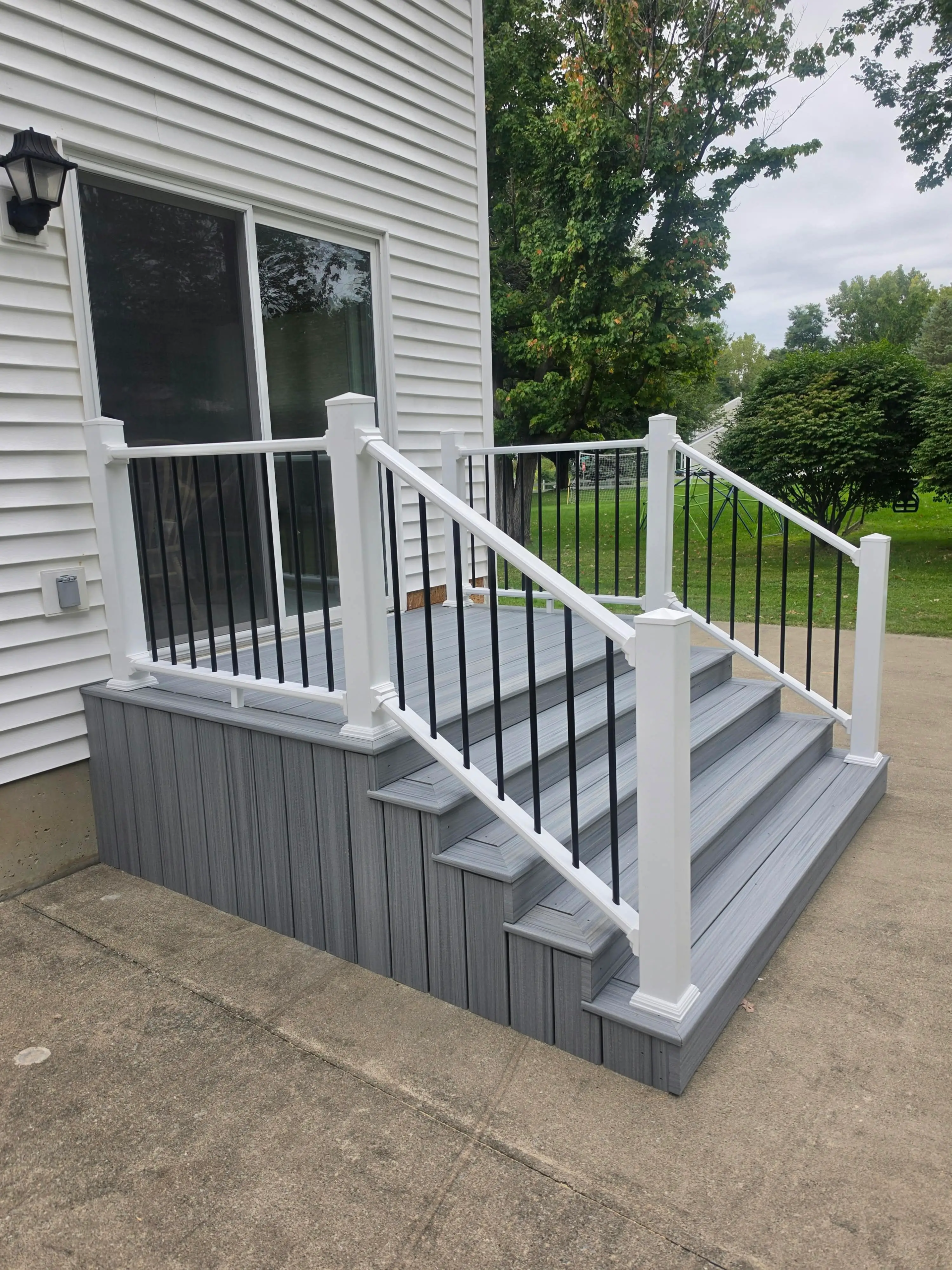
- Curb Appeal Composite treads and metal balusters tie the deck into the house.
- Code and Resale Railings are required above a certain height, and a buyer's inspector checks.
Stairs and Railings Built to Last a Capital Region Winter
Professional Grade Contractors builds deck stairs in Rotterdam, NY, along with the railings that go with them, for homeowners across the Capital Region.
Kids running down to the yard barefoot. A tray of burgers going up. Nobody looking at their feet. That only happens when the stairs were laid out properly before anyone touched a saw.
Or you walked out after the snow melted, felt a bounce on the bottom step, and you are trying to work out how bad it is. There is a section further down for exactly that.
Why Deck Stairs Need Their Own Structure
Stairs carry more concentrated load per square foot than the deck does, on a much smaller footprint. Three people walking down at once puts more weight on a thirty six inch run of stringer than that same weight sitting on the deck surface. All of it lands on whatever is under the bottom step.
That is the part nobody sees and the part that fails first.
When we pull an old set of stairs off a house around here, the bottom of the stringers is usually sitting on a couple of patio blocks or straight on the dirt. It held fine the first year. Then the freeze and thaw cycle went to work, lifting and dropping them somewhere slightly different. A few dozen cycles later the whole run has rotated away from the ledger.
So stairs get their own footings, dug below the frost line and inspected before anything is framed. The landing pad gets pitched away from the house so snowmelt runs off instead of pooling at the bottom tread.
Repair or Replace Your Deck Stairs
A cracked tread is a board. A rotted stringer is the whole staircase.
The stringers are the notched boards running down each side, and they carry every pound of weight. Once water gets into those notches and freezes, the wood splits from the inside. That cannot be patched.
Ever notice one step that feels off? It is usually the bottom one. The stringers were cut for the deck height and nobody adjusted for the thickness of the landing. Every riser has to be within a small tolerance of the others, and your foot catches the one that is not.
Five things you can check yourself
- Probe the stringer Where it meets the ground. If a screwdriver sinks in, the wood is done.
- Look at the deck rim Even a quarter inch gap means the connection is failing.
- Shift weight on a tread Rocking or twisting is a footing problem, not a board problem.
- Check what it sits on Patio blocks or dirt means frost has been lifting it.
- Pull on the railing Loose posts usually mean the blocking inside has rotted.
Two or more of those together means replacement, and over ten years that is usually the cheaper answer. If the frame is solid, a tread swap or a few fresh screws is all it takes, and we will say so.
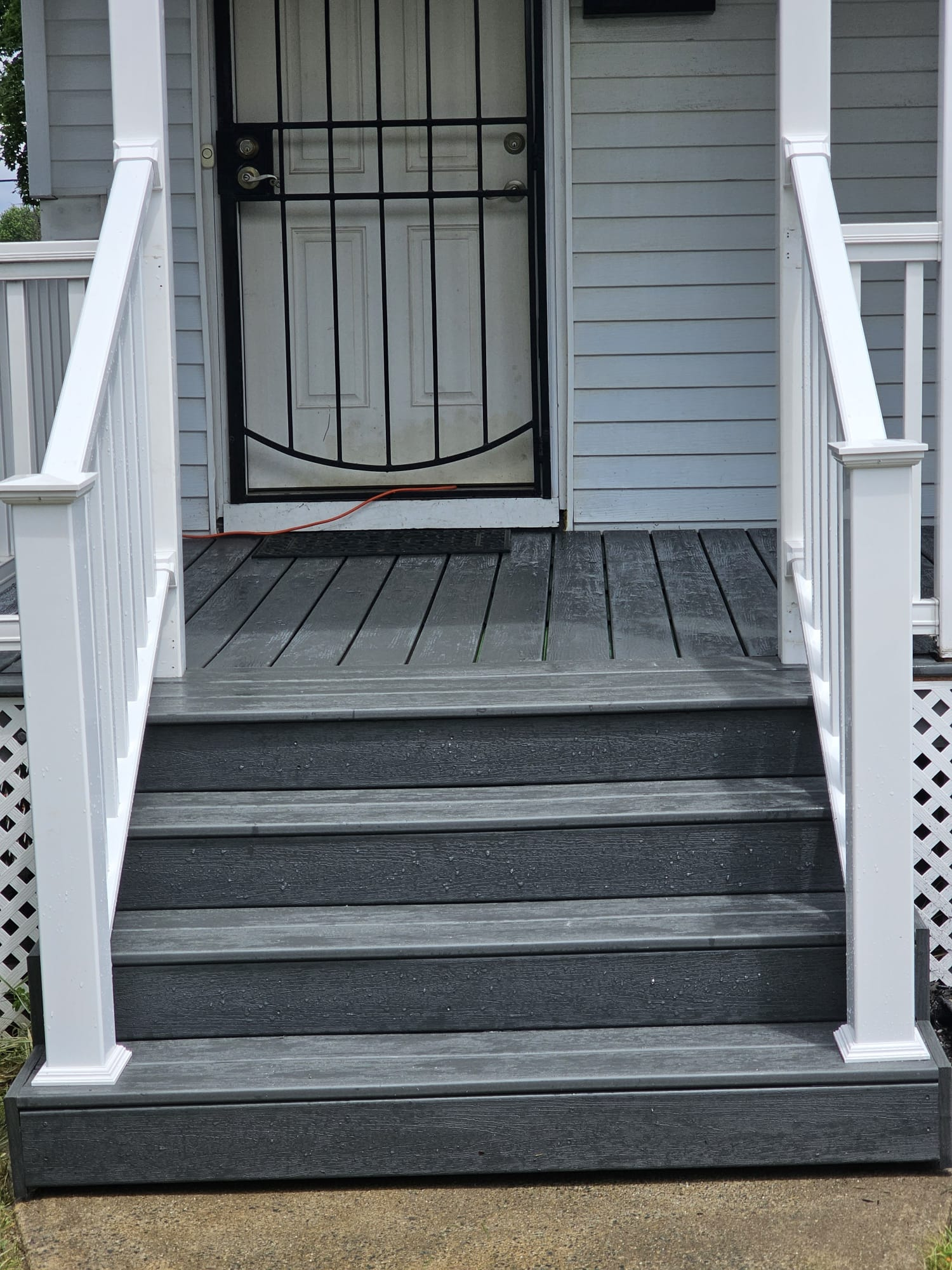
Before a party or an event
If a stair or a railing breaks right before you have people at the house, call us. We will come fix it.
Deck Railings in Rotterdam
Railings are where most deck stairs fail first, and they are the one part of the structure a code inspector will not negotiate on.
When a post loosens it is almost never the rail. It is the post blocking inside the deck frame rotting out. Replacing the rail without fixing the blocking puts it right back where it was inside a season or two.
Adding a railing to an existing deck can absolutely be done, as long as the frame is sound where the posts land. That is the first thing we check rather than the last.
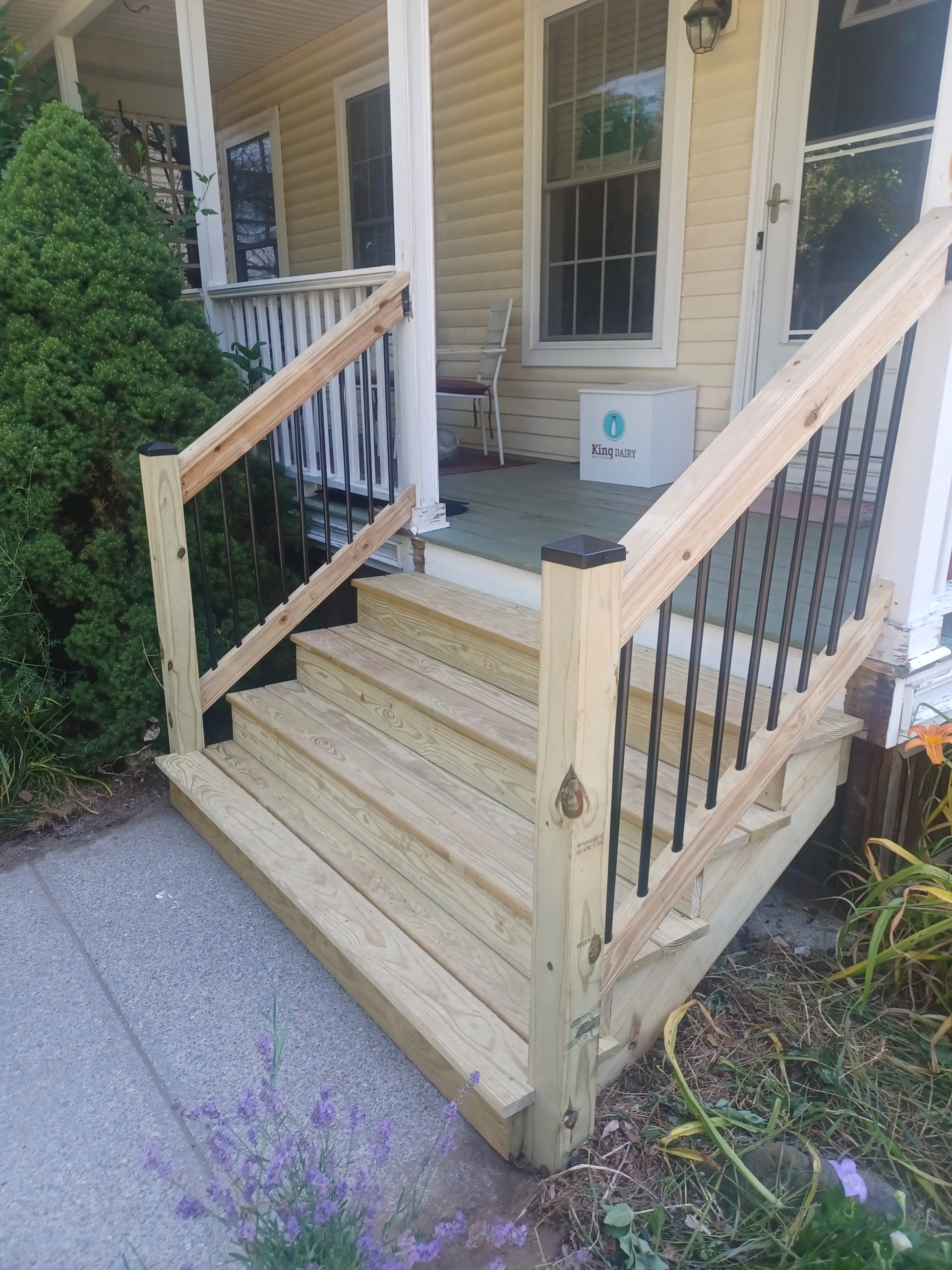
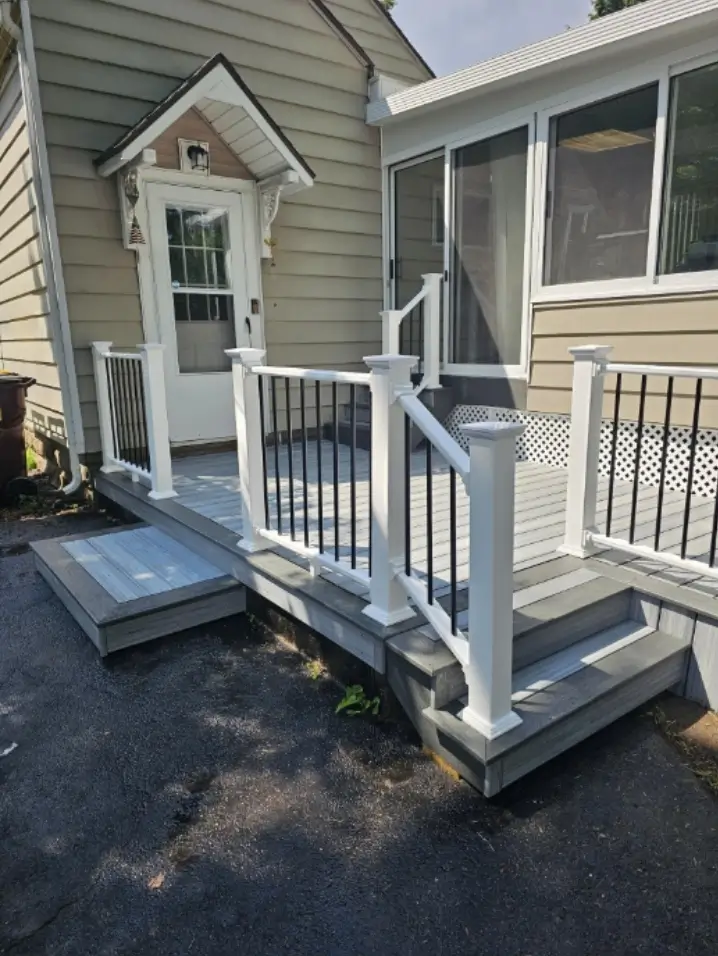
For material, we work in Trex and Deckorators composite, Veranda vinyl when the goal is no maintenance at all, and pressure treated when it needs to match an existing deck. Metal balusters are an upgrade available on any of them.
Railings are required above a certain height above grade, and there are requirements for railing height, baluster spacing, and graspable handrails on stairs. An inspector checks all of it. We build to it and pull the permit as part of the job.
- Total rise The number of steps drives everything. A four-step run and a nine-step run are different jobs.
- Width A three foot stair and a five foot stair are two different experiences and two different prices.
- Material Pressure treated, composite, and the railing system all move the number.
- What is underneath Footings, a landing pad, and inspection are real cost and the part you never see.
What Deck Stairs and Railings Cost in Rotterdam, NY
A handyman can absolutely swap a tread or tighten a rail, and for that work they are the right call. We tell people that.
Where it stops being a handyman job is anything structural. Stringers, footings, the connection to the deck frame, and any railing that has to pass inspection. Those are the parts that fail, and they fail in ways that are expensive and dangerous to get wrong.
We measure, we put a written quote in front of you, and the consultation and the 3D rendering cost nothing.
Who keeps the markup on materials?
We hold a Lowes ProDesk trade account that earns 15 to 20 percent off material orders over a thousand dollars, and that discount goes to you rather than into our pocket.
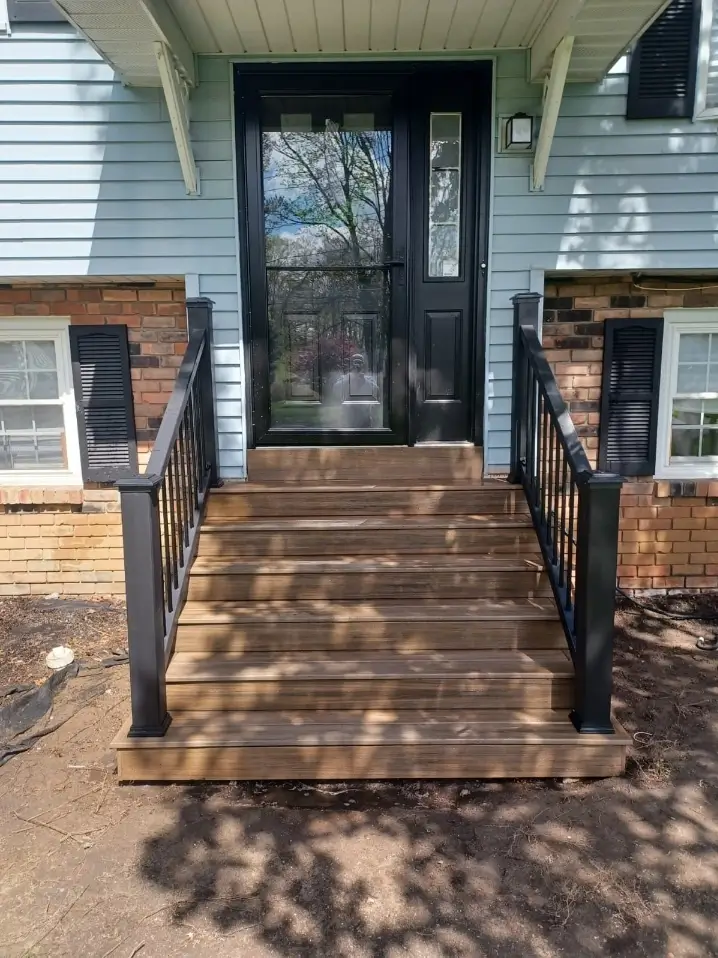
How We Build Them
Shop-cut stringers almost never match real-world grade. We cut them here, in your yard, against your grade.
And you decide the width, not us. A three foot stair and a five foot stair are two completely different experiences, which is exactly why you see the rendering before anything is ordered.
If you call during business hours we answer live, or call back within ten minutes.
-
1
Measure total rise
Deck surface to finished landing, not to the dirt as it sits today. Off by an inch and every step is off.
-
2
Divide into equal risers
Calculated, not eyeballed. Your body notices even a small difference between steps.
-
3
Build the rendering
You see the width, the turn and the railing style, with samples in hand, before anything is ordered.
-
4
Permit and footings
Dug and poured below frost depth, then inspected before anything gets backfilled.
-
5
Cut, hang and finish
Stringers cut on site, hung with outdoor-rated hardware, then treads, fascia, skirting and railings.
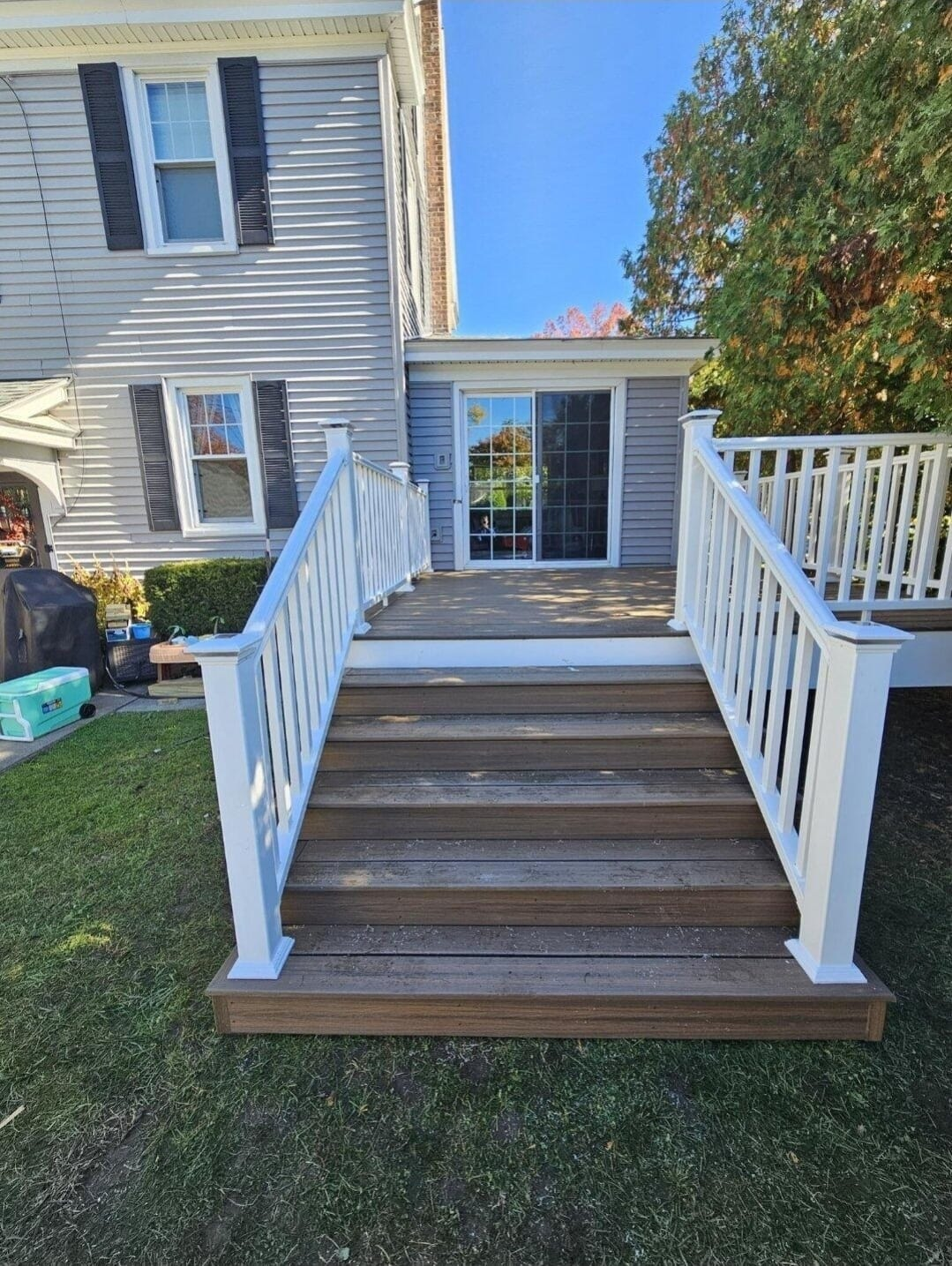
Stairs From a Deck Builder
Stairs are rarely the only thing going on. If you are building a new deck too, the stairs, framing, boards and railings all get designed as one thing instead of a patch that never quite matches.
If a fence installation is going in the same season, gate placement gets laid out against where the stairs actually land rather than against where someone assumed they would. The same goes for porch construction on the front of the house.
One schedule. One crew. One point of contact, and one warranty covering the whole thing.
Let’s Take a Look at Your Stairs
Send us a few details and we will come out to measure. You will get a 3D rendering of the stairs on your deck, material samples to compare, and a written estimate.
If it turns out you only need a tread swapped, we will tell you that.
Or call us (518) 866-6454We answer live during business hours.
Frequently Asked Questions
How Do You Know If Deck Stairs Need Repair or Full Replacement?
Look at the stringers before you look at anything else.
A cracked tread is a board and it swaps out in an afternoon. A stringer you can sink a screwdriver into is the whole staircase, because that is the piece carrying every pound of weight. If two or more of the walk-out checks above come back bad, replacement is usually the cheaper answer over ten years.
Why Do the Bottom Steps on Deck Stairs Feel Bouncy or Loose?
Almost always because of what the bottom of the stringers is sitting on.
A lot of stairs around here were set on a couple of patio blocks or straight on the dirt. That holds fine the first year. Then the ground freezes, lifts, thaws and drops them somewhere slightly different, over and over, until the whole run has rotated away from the house.
Can I Just Replace One Rotted Stair Tread Instead of the Whole Staircase?
Yes, if the stringers underneath are solid.
One cupped or split tread on an otherwise straight stair is a board swap, not a project. Any homeowner comfortable with a drill can handle it, and we tell people that on the phone. What you cannot patch is a stringer that has split from the inside.
Why Does One Step on My Stairs Always Feel Off Compared to the Others?
It is usually the bottom one, and it is usually a layout mistake rather than damage.
The stringers were cut for the deck height and nobody adjusted for the thickness of the landing. Every riser in a run has to be within a small tolerance of the others. Your foot catches the one that is not, every single time, without you ever consciously noticing why.
Do Deck Stairs in Rotterdam Need Special Footings Because of Winter Weather?
They need footings dug below the frost line, which is not special so much as it is the only thing that works here.
The freeze and thaw cycle moves anything sitting shallow in the ground. Below frost, there is nothing to lift. We also pitch the landing pad away from the house so snowmelt runs off instead of pooling at the bottom tread.
Should I Fix My Deck Stairs Now If I Am Replacing the Whole Deck in a Few Years?
Usually not, and we will say so.
Rebuilding the stairs now means building them twice. Better to stabilize what is there, keep it safe, and do the stairs when the deck gets done so the framing, boards and railings all line up as one design. What does not wait is anything you can rock by hand, a soft bottom step, or risers that vary noticeably.
Can You Add a Railing to an Existing Deck?
Yes, as long as the frame is sound where the posts land.
That is the first thing we check rather than the last. Posts carry real force when somebody leans on a rail, and they transfer it into the deck framing. If the blocking there has rotted, bolting a new railing to it puts you right back where you started within a season or two.
Do Deck Stairs and Railings Need to Meet New York State Code?
Yes. There are requirements covering rise and run consistency, railing height, baluster spacing, and graspable handrails on stairs.
An inspector signs off on all of it. We build to code and pull the permit as part of the job, and we confirm what applies to your specific deck during the design meeting rather than guessing at it afterward.